Keynotes


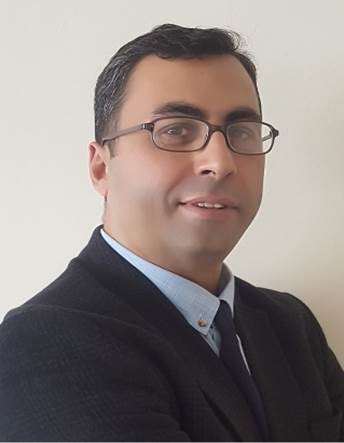
Prof. Dr. A.François Ravalison
Centre National de Recherches Industrielle et Technologique (CNRIT),
University of Antananarivo, Madagascar

Short Bio:
Professor François A. Ravalison is a distinguished academic holding the rank of Full Professor, having earned his advanced degrees from the University of Antananarivo and the University North of Madagascar. His academic pursuits culminated in a Doctorate degree and HDR (Habilitation à Diriger des Recherches) in Management of Engineering and Technology from the University of Antananarivo. Professionally, Professor Ravalison maintains a multifaceted career: he is a University Professor at the University of Antananarivo and serves as a Research Fellow at CNRIT. Furthermore, he is recognized internationally as an International Expert in the Training for Rural Economic Empowerment (TREE) methodology developed by the International Labor Office (ILO), a role which sees him applying his expertise across African and Arab countries. His core research interests lie at the intersection of Management of Engineering and Technology, with a specific focus on Lean Engineering, Lean Energy and the design and modelling of industrialization strategies for Africa.

Title: Energy Issues and Scientific Research Challenges: the Case of the Electricity Sector in Madagascar

Abstract: The Malagasy electricity sector is characterized by profound challenges, notably a low national electrification rate of 36%. This issue is intensified by a severe urban-rural disparity, with urban access at 57% contrasting sharply with only 7% in rural areas. The sector is dominated by the state-owned company, JIRAMA, which faces immense financial instability. JIRAMA's total debt is estimated to reach approximately $881 million in 2025 (comprising $335 million in current obligations and $546 million in cumulative arrears), a figure representing 5% of the 2024 national GDP. This situation necessitates significant public investment, with the government providing around $100 million annually to cover the company’s operating losses. Against this backdrop, the primary objective of this research is to investigate how scientific research can be strategically leveraged to tackle these multifaceted energy issues. The study employs a methodological approach inspired by the Function Analysis System Technique (FAST) to analyze the systemic failures and potential intervention points within the electricity infrastructure. Results confirm that scientific inquiry can meaningfully contribute to the resolution of current energy challenges. The study concludes, through a Strategy Roadmapping, that securing accessible electricity sector data for scientific researchers is principal, as this transparency facilitates a necessary multi-actor collaboration required for achieving sustainable and equitable energy access.


Prof. Dr. Paulo Cesar De Morais
Catholic University of Brasilia, Genomic Sciences and Biotechnology, Brasilia, Brazil
University of Brasilia, Institute of Physics, Brasilia, Brazil

Short Bio:
Paulo C. DE MORAIS (H-62), PhD, was full Professor of Physics at the University of Brasilia (UnB) – Brazil up to 2013, Appointed as UnB’s Emeritus Professor (2014), Appointed as Guest Professor of Huazhong University of Science and Technology – China (2011), Visiting Professor at Huazhong University of Science and Technology (HUST) – China (2012-2015), Appointed as Distinguished Professor at Anhui University (AHU) – China (2016-2019), Appointed as Full Professor at Catholic University of Brasília (UCB) – Brazil (2018), Appointed as CNPq-1A Research Fellowship since 2010. 2007 Master Research Prize from UnB, 2008-member of the European ERA NET Nanoscience Committee, Member of the IEEE-Magnetic Society Technical Committee, Senior Member of the IEEE Society, 2012 China’s 1000 Foreign Expert Recipient, and 2012 Academic Excellence Award from Brazilian Professor’s Union. He held two-years (1987-1988) post-doc position with Bell Communications Research – New Jersey, USA and received his Doctoral degree in Solid State Physics (1986) from the Federal University of Minas Gerais – Brazil. He graduated in both Chemistry (1976) and Physics (1977) at UnB. Professor Morais is member of the Brazilian Physical Society and the Institute of Electrical and Electronics Engineers – IEEE. He has served as referee for more than 50 technical journals, takes part of the Editorial Board of more than 15 technical journals and has conducted research on nanomaterials for over 40 years. He is known for his research in preparation, characterization and applications of nanosized materials (magnetic fluid, magnetoliposome, magnetic nanoemulsion, magnetic nanocapsule, magnetic nanofilm, magnetic nanocomposite, nanosized semiconductors, polymeric dots, carbon dots, and graphene quantum dots). With more than 500 published papers in peer reviewed journals, more than 14,500 citations, more than 250 international invited talks (35 countries), and 16 filed patents. He has appeared in recent World ranking of top scientists, such as 2020-Stanford, 2022-Research.com, 2023-AD Scientific Index, 2023-Research.com, 2024-Elsevier, ONE Research Community, 2025-AD Scientific Index, 2025-Research.com, and 2025-Stanford-Elsevier.

Title: Unveiling copper sulfide nanofilms for solar cells technology

Abstract: The presentation will be focused on the exploration of DC magneton sputtering technique for fabrication of copper sulfide nanofilms addressed to be used in solar cells. The nanofilm’s thickness control is achieved through the radial position of the glass substrates (10 mm×10 mm dimensions), one aside the other along the radial direction within the deposition system, which goes up to 55 mm on opposite directions from the axis chamber center. Considering the growth condition and the chamber design, it is found that the nanofilm thickness reduces systematically from the center towards the border of the deposition plane, from about 1000 nm down to about 200 nm. The nanofilm thickness was successfully and consistently determined via x-ray diffraction and optical transmittance data analyses. These analyses represent an innovative approach to extract the nanofilms’ thickness, which was corroborated by cross-sectional scanning electron microscopy images. Additionally, a strong dependence of the unit cell volume and mean crystallite size on the radial positioning of the substrate was observed. Electrical resistivity and charge carrier concentration were also determined for the as-grown copper sulfide nanofilms. The optical and electrical characterizations strongly suggest that the as-fabricated nanofilms exhibit promising optoelectrical characteristics, making them suitable for solar cells applications.